

How to Create Matching Outfits for a Dance Group
Last Updated: November 5, 2026
Quick Summary
To create matching outfits for a dance group, decide your colour scheme, pieces, sizes and budget before you order a single item, then build in time for delivery and alterations. Order samples for two or three dancers of different body types before the bulk order.
- Use two base colours and one accent to keep the group unified without breaking the look.
- Collect chest, waist and height from every dancer instead of letter sizes.
- Choose one anchor piece, such as a printed team top, and let the rest flex.
- Test every piece with the actual movements in your routine before committing.
- Order at least three to four weeks before your event where you can.
Table of Contents
- Start With a Group Outfit Plan Before You Buy Anything
- Dance Team Outfit Colour Schemes That Actually Work
- Dance Group Costume Ideas for a Cohesive Look
- How to Design Team Shirts for Dancers
- Comfortable Dance Performance Outfits: Fabric, Fit and Movement
- Inclusive Sizing, Modesty Options and Group Budgeting
- Ordering Your Dance Group Outfits From Dprintclothing
- Frequently Asked Questions
Start With a Group Outfit Plan Before You Buy Anything
Most dance groups order matching outfits backwards: they pick a top they like, then find it clashes with half the group's leggings, doesn't suit taller dancers, and arrives after the competition.
At Dprintclothing, we've supplied custom apparel to teams and groups since 2015.
The short answer: decide your colour scheme, pieces, sizes and budget before you order a single item, then build in time for delivery and alterations.
Build a Simple Planning Workflow
A good group plan takes one meeting and one shared document. Work through it in this order:
- Agree the purpose. Competition, showcase, class or rehearsal, each needs different pieces.
- Set the date. Work backwards from the performance date.
- Collect sizes from every dancer. Chest, waist and height, not just "small" or "medium".
- Choose two or three colours.
- Pick the pieces. Tops, bottoms, and one layer.
- Set a per-dancer budget. Include alterations.
- Order samples for two or three dancers of different body types before the bulk order.
That last step is the one most groups skip, and it saves the most trouble. A sample tells you how the fabric moves, how the fit sits, and whether the colour looks right under stage lighting.
Work through the group plan in this order so nothing is left until the last minute.
Step |
What to do |
|---|---|
1 |
Agree the purpose: competition, showcase, class or rehearsal |
2 |
Set the date and work backwards from the performance |
3 |
Collect chest, waist and height from every dancer |
4 |
Choose two or three colours |
5 |
Pick the pieces: tops, bottoms and one layer |
6 |
Set a per-dancer budget including alterations |
7 |
Order samples for two or three body types before bulk order |
Dance Team Outfit Colour Schemes That Actually Work
The strongest dance team outfit colour schemes use two base colours and one accent. Two colours keep the group unified; the accent adds variety without breaking the look.
Three schemes work reliably for groups of any size:
- Dark base plus one bright accent. Black or navy with a single vivid colour on tops, belts or accessories. Forgiving on stage and easy to shop for.
- Tonal scheme. Three shades of the same colour, such as pale, mid and deep blue. Dancers mix pieces within the family and still look coordinated.
- Neutral base plus a group colour. Grey, white or stone bottoms with one strong colour on top. The simplest scheme to source across many sizes.
Choosing a Shared Colour Scheme
Start with your performance space. A dark stage swallows dark colours, so lean brighter for competition pieces.
Then check the practical side. Ask each dancer to hold the proposed colour against their skin tone in daylight.
Watch out: don't choose a colour from a screen alone. Fabric colour shifts between monitors, and a shade that looks teal online can arrive closer to green.
A Concrete Palette Method You Can Run in One Meeting
Rather than debating colours by name, build the palette in three fixed slots. This stops the discussion drifting and gives you a shopping list you can hand to any supplier.
- Anchor slot. One dark neutral every dancer already owns or can easily buy: black, navy or charcoal. This fallback makes mismatched pieces read as a set.
- Group slot. One mid-tone colour that carries the identity. Pick it from your existing logo or club colour so the kit ties back to the group's branding.
- Accent slot. One bright or light tone used sparingly on trims, belts, hair ties or a single garment panel. Keep it small.
Write the three slots down as named shades from a single supplier's range, so the colours stay consistent across the order.
Testing the Palette Under Real Lighting
Colour that looks right in a studio can fail on stage. Run three quick checks before you commit the bulk order:
- Daylight check. Hold fabric swatches together in indirect daylight, the most neutral light, to see whether the three slots sit together.
- Stage-light check. View the swatches under the venue's lighting or a similar warm or cool spotlight. Warm stage light pushes reds and yellows forward and dulls blues; cool LED light does the opposite.
- Skin-tone check. Ask dancers with a range of skin tones to hold the group and accent colours near their face. A colour that flatters one dancer can wash out another, which is why the anchor neutral does most of the work and the accent stays small.
Groups often pick a strong accent, then discover under stage light that it dominates every photo. Keeping the accent to trims and accessories protects against this.
Adapting the Palette for Different Skin Tones and Photography
No single colour flatters every dancer equally, so design the outfit so the anchor neutral sits closest to the body and the accent sits further out.
For photography, contrast matters more than exact shade matching. Light text on a dark anchor and dark text on a light accent read clearly in stage photos and phone shots.
If the group performs in venues with different lighting, favour the dark-base-plus-bright-accent scheme.
Dance Group Costume Ideas for a Cohesive Look
Cohesion comes from repeated elements, not identical garments. You can dress a group of twenty in the same three colours and still let each dancer wear something that suits them.
Here are dance group costume ideas that hold together without copying and pasting:
- Same top, different bottoms. One custom top for everyone, with dancers choosing leggings, shorts or joggers in the group colour.
- Same colour, different cuts. Everyone in the same shade, but crop tops, tees and vests mixed by preference.
- Layered looks. A base layer for all, plus a hoodie or wrap for entrances and warm-ups.
Creating a Cohesive Look Without Identical Outfits
Choose one anchor piece and build out from it. A printed team top is the easiest anchor because it carries your logo, colours and group identity in one garment.
Then let the rest flex. Dancers who prefer more coverage wear a longer top or add a shrug; dancers who run hot wear the sleeveless version.
This also solves a problem most guides ignore: bodies differ, and identical outfits rarely flatter everyone equally.
How to Design Team Shirts for Dancers
A dance team shirt has to do two jobs: identify the group and move with the dancer. Design for movement first, then add your branding.
Follow these steps:
- Pick the garment before the design. A performance tee in a wicking fabric beats a standard cotton tee for anything active.
- Place the logo where it won't distort. Centre chest or upper back works best; avoid large prints across the shoulders or underarms.
- Keep text large and short. A group name and a two-word slogan read better from the back of a hall than a paragraph.
- Use high-contrast colours. Light text on a dark shirt, or the reverse.
- Print names and numbers only if the group wants them. They add cost and limit reuse between dancers.
If you're designing for a dance group and want to browse performance tees, see our custom sports performance t shirts with your logo or text added.
Comfortable Dance Performance Outfits: Fabric, Fit and Movement
Comfortable dance performance outfits start with fabric that moves sweat away and dries fast. Look for lightweight polyester or poly-blend performance fabrics.
AWDis Just Cool Contrast Wicking T-Shirt →
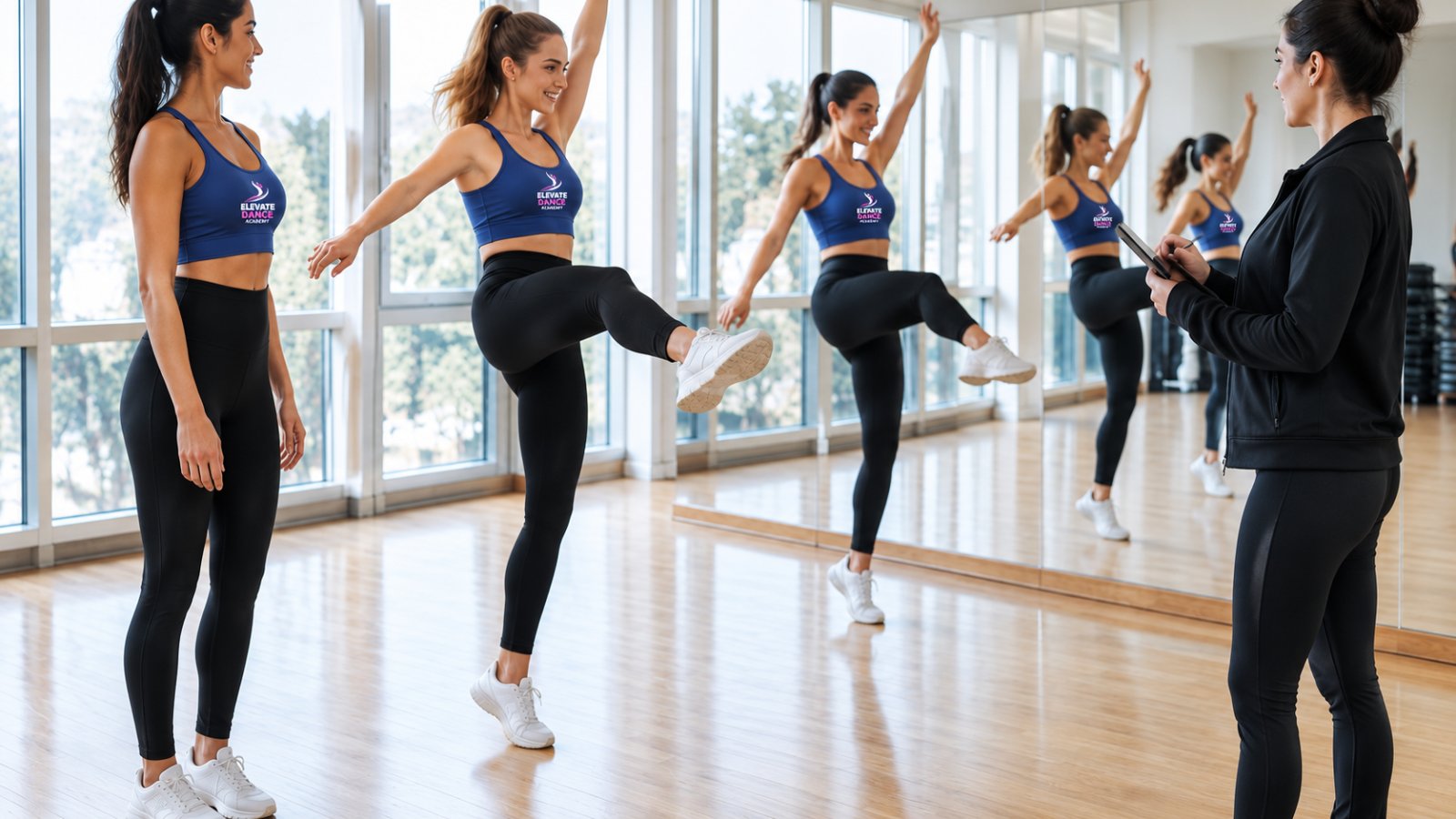
Fit matters as much as fabric. A top that rides up during a lift or a waistband that digs in during floor work will ruin a performance.
For dancers who want a specific breathable option, the Spiro Aircool Tee uses a lightweight polyester mesh that suits high-energy work.

Run this movement check with two or three dancers before the bulk order:
- Full arm raise overhead, no riding up
- Deep lunge, no restriction at the hip
- Floor work, waistband stays put
Layering Dancewear for Warmth and Quick Changes
Layers keep muscles warm between numbers and make backstage changes faster. Build a simple three-layer system:
- Base layer: the performance top and leggings.
- Warm layer: a hoodie or sweatshirt for waiting and warm-ups.
- Quick-change layer: a wrap, shrug or zip top that comes off in seconds.
For groups planning warm-up layers, see our custom printed Gildan Heavy Blend hooded sweatshirt.
Inclusive Sizing, Modesty Options and Group Budgeting
A group outfit only works if every dancer can wear it comfortably.
Modesty matters too. Offer longer tops, leggings under shorts, and higher necklines as standard options rather than exceptions.
For groups with younger dancers, the Spiro Junior Performance Aircool Tee gives you a matching performance option in junior sizes.

Budgeting is where planning pays off. Set a per-dancer figure, then split it across pieces.
Watch out: don't spend the entire budget on the showpiece top.
A Sizing Workflow That Accommodates Every Body Type
Letter sizes hide too much variation to be useful for a group order. Run a short measuring session and record four numbers per dancer: chest, waist, hip and height.
Match measurements to the supplier's size chart rather than the dancer's usual high-street size, since size charts differ between brands and a medium in one range can sit closer to a small in another.
Build the outfit so fit is adjustable rather than fixed:
- Tops with some stretch and a longer body length accommodate taller dancers and those who prefer more coverage without needing a separate style.
- Bottoms with an elastic or drawcord waist cope with waist variation and are easier to alter than fixed waistbands.
- Layers sized separately from base layers let dancers who want more coverage add a hoodie or wrap without changing the base outfit.
Modesty and Comfort Options to Offer as Standard
Treat coverage as a design choice, not an exception. Offer the group a small menu of standard options so no dancer has to ask for something different:
- Longer-line tops or tunic styles over the standard crop or fitted tee.
- Leggings worn under shorts for dancers who prefer more leg coverage.
- Higher necklines and wider straps as an alternative to a standard vest.
Keeping these within the same colour palette means the variations read as part of the design rather than as exceptions. This is also where the anchor-piece approach pays off: if everyone shares the same top or colour, individual coverage choices disappear into the overall look.
Budgeting and Sourcing for a Whole Group
Set a per-dancer budget and split it across three buckets: the anchor piece, the supporting pieces, and a contingency for alterations and replacements. A common pattern is roughly half on the anchor garment that carries the logo and colour, and the rest on bottoms, layers and accessories.
Compare the main sourcing routes before you commit:
- Ready-to-wear in a shared colour. The fastest and usually the cheapest route. Exact shades vary between retailers, so buy the whole group's pieces in one order from one supplier.
- Wardrobe reuse. Ask dancers to supply their own black leggings or neutral bottoms and buy only the matching top. This cuts cost sharply but depends on everyone owning a close enough shade, so set a clear colour rule.
- Custom group pieces. Best for cohesion and branding, and bulk ordering lowers the per-item cost. The trade-off is longer lead time and the need to collect sizes and approve a proof before the run.
Plan for varied budgets by tiering the outfit: a core piece everyone buys, plus optional layers and accessories dancers can add if their budget allows. This keeps the group visually consistent without pricing anyone out.
Ordering, Alterations and Contingency Planning
Lead time is the most common cause of last-minute problems. Work backwards from the performance date and allow time for size collection, sample fitting, the bulk order, delivery and alterations. Allow plenty of time ahead of the event for custom pieces.
Before the bulk order, fit samples on two or three dancers of different body types to confirm length, sleeve position and waistband comfort, then adjust the order before it is placed. Keep a simple alteration plan: identify which dancers are likely to need hems shortened or waistbands taken in, and book a local alterations service early rather than in the final week.
Finally, build a contingency into both budget and order:
- Keep two spare pieces in the most common size for replacements.
- Keep a small budget reserve for emergency alterations.
- Record every dancer's measurements in one shared document so replacements can be reordered without re-measuring.
Ordering Your Dance Group Outfits From Dprintclothing
Once the plan is set, ordering is the easy part. Send us your design, your sizes and your deadline.
We've specialised in custom apparel since 2015, offering both printing and embroidery, bulk discounts, and fast delivery. We work with reputable brands like Fruit of the Loom, Russell and Gildan, and we handle everything from a single garment to large group orders.
To carry and store the group's kit between shows, our Bag Base budget gymsac is a practical add-on for the whole team.

A few habits make ordering smoother:
- Order at least three to four weeks before your event where you can.
- Send one consolidated size list, not twenty separate messages.
- Approve a single digital proof before the full run.
Frequently Asked Questions
How do you make a dance group look coordinated without buying identical outfits?
Agree on a core colour scheme and one shared element, such as a printed team shirt, a hoodie or a logo, then let dancers mix and match their own leggings, shorts and layers around it. Choose two or three matching colours and repeat them across tops, bottoms and accessories. This keeps the group visually tied together while allowing different body shapes, sizes and personal preferences, and it usually costs less than kitting everyone out head to toe.
What fabric is best for comfortable dance performance outfits?
Look for lightweight, breathable performance fabrics that stretch and wick moisture, such as recycled polyester or polyester mesh. The AWDis Just Cool Contrast Wicking T-Shirt, for example, is 100% recycled polyester at 140gsm, and the Spiro Aircool Tee uses 100% polyester eye-bird mesh at 130gsm. Avoid heavy cotton for high-energy routines because it holds sweat and restricts movement. Always have dancers try garments on and test arm raises, kicks and floor work before you order the full set.
When should a dance group order its matching outfits before a performance?
Work backwards from the performance date and allow time for design approval, sample checks, bulk production, delivery and alterations. Plan ahead for design approval, production and delivery, and keep a written record of every dancer's size before committing to the full order.
How can you personalise outfits for a dance team?
Add a club logo, team name, dancer name or number to a shared garment so the group looks unified but each dancer has something of their own. Printed performance tees work well for this, such as the AWDis Just Cool Contrast Wicking T-Shirt at £14.99 or the kids' version at £13.99, both of which can be custom printed with a logo, text, name or number. Keep personalisation in one consistent colour and position so the overall look stays cohesive.
Getting a whole dance group into outfits that look unified and feel right to wear is a planning job, not a shopping job. Start with the colour scheme, test the movement, collect real measurements, and order together. Dprintclothing can handle the printing and embroidery for your group, with bulk discounts on larger orders and both print and embroidery options available. Get started with Dprintclothing and give your dancers a look they can move in.

