

Durable T-Shirts for Daily Work: A 2026 Buying Guide
Last Updated: October 24, 2026
Quick Summary
Durable t-shirts for daily work are built to survive repeated washing, physical labour and constant wear without losing shape, colour or print quality. Buy by fabric weight and stitch quality rather than price per shirt, since heavier ringspun cotton and poly-cotton blends outlast cheap lightweight tees on cost per wear.
- Heavyweight cotton of 185-215gsm resists abrasion and pilling better than lightweight 140-160gsm cotton.
- Poly-cotton blends hold shape and colour through frequent high-temperature industrial washing better than pure cotton.
- Check for taped necks and double-stitched hems, since weak seams fail before fabric does.
- Wash work tees at 30°C or lower, inside out, and skip fabric softener to protect fibres and print.
- The four work tees compared cost between £13.74 and £14.29, a spread of under one pound.
Table of Contents
- What Makes Durable T-Shirts for Daily Work Worth Buying
- The Best Fabric for Work T-Shirts: Cotton, Poly-Cotton and Weight
- Why Heavyweight Cotton Work T-Shirts Hold Up Longer
- Fit, Sleeve and Neckline Choices for Men and Women
- How to Wash Work T-Shirts So They Last
- Custom Printed Work T-Shirts: Getting the Print to Last
- What Four Durable Work T-Shirts Cost in Practice
- Conclusion
- Frequently Asked Questions
What Makes Durable T-Shirts for Daily Work Worth Buying
Durable t-shirts for daily work are garments built to survive repeated washing, physical labour and constant wear without losing shape, colour or print quality.
A work T-shirt is not the same product as a fashion tee. Daily workwear faces abrasion from tools, straps and surfaces, plus sweat, sun and industrial washing.
The core argument here is simple: buy by weight and stitch quality, not by price per shirt.
The Best Fabric for Work T-Shirts: Cotton, Poly-Cotton and Weight
The best fabric for work t-shirts depends on the job. 100% cotton suits indoor and dry conditions, while poly-cotton blends handle sweat, heat and frequent washing better. Fabric weight, measured in grams per square metre (gsm), tells you how much substance the cloth has.
Here is how the main options compare:
Fabric |
Typical Weight |
Breathability |
Best For |
Weakness |
|---|---|---|---|---|
100% cotton, lightweight |
140-160gsm |
High |
Indoor, light duty |
Pills and thins faster |
100% cotton, heavyweight |
185-215gsm |
Moderate |
Site work, outdoor |
Slower to dry |
Poly-cotton blend |
180-200gsm |
High |
Heat, sweat, laundry cycles |
Less soft initially |
Cotton-rich blend (60/40) |
180-200gsm |
Moderate |
Mixed indoor/outdoor |
Slightly less breathable than 50/50 |
Polyester performance knit |
150-180gsm |
Very high |
Hot environments, sweat-heavy work |
Can snag on rough surfaces |
Pure cotton feels softer against the skin and takes print well. Its weakness is shrinkage and pilling over time. Poly-cotton holds colour and shape through repeated washing, which is why many trade uniforms use it.
Matching Fabric to Job Conditions
Most practitioners find that the fabric choice should follow the dominant stress the shirt will face, not the label or the price. Use this framework:
- Heat and sweat: A 50/50 poly-cotton or polyester performance knit wicks moisture and dries faster than pure cotton. For hot indoor environments such as kitchens or boiler rooms, a 180gsm blend keeps you cooler than a 210gsm cotton tee.
- Abrasion and snagging: Heavier cotton (200gsm and above) or a cotton-rich blend resists scuffs from tools, straps and rough surfaces. Lightweight polyester can snag and pull on brickwork or scaffolding.
- Frequent industrial washing: Poly-cotton holds shape and colour through repeated high-temperature cycles better than pure cotton, which shrinks and fades. If your shirts are laundered commercially, a blend is usually the safer choice.
- Print and branding: Smooth, ringspun cotton takes ink more evenly and resists cracking at the print edges. Rough, low-weight weaves cause ink to flake sooner.
- Layering under protective equipment: A lighter 150-180gsm tee reduces bulk under a harness or high-vis vest, while a heavier tee adds a layer of padding against straps.
How Fabric Weight Changes the Job
Weight changes how a shirt behaves on the body and on the wash cycle. A 140gsm tee feels cool but shows wear quickly under a tool belt.
For groundskeeping and outdoor work in warm weather, a mid-weight poly-cotton keeps you cooler. For manual work indoors, a heavier cotton gives better protection against snags. Match the weight to the conditions, not to the label.
A common pattern is to keep two weights in rotation: a lighter blend for hot days and a heavier cotton for cooler months or abrasive tasks. This also spreads wash wear across more garments, extending the life of each shirt.
Why Heavyweight Cotton Work T-Shirts Hold Up Longer
Heavyweight cotton work t-shirts last longer because there is more fibre between the wearer and the abrasion. The Russell J215M Classic Heavyweight Ringspun T-Shirt is a good example: 100% combed ring spun cotton at 210gsm, built for branding and daily wear.
Russell J215M Classic Heavyweight Ringspun T-Shirt
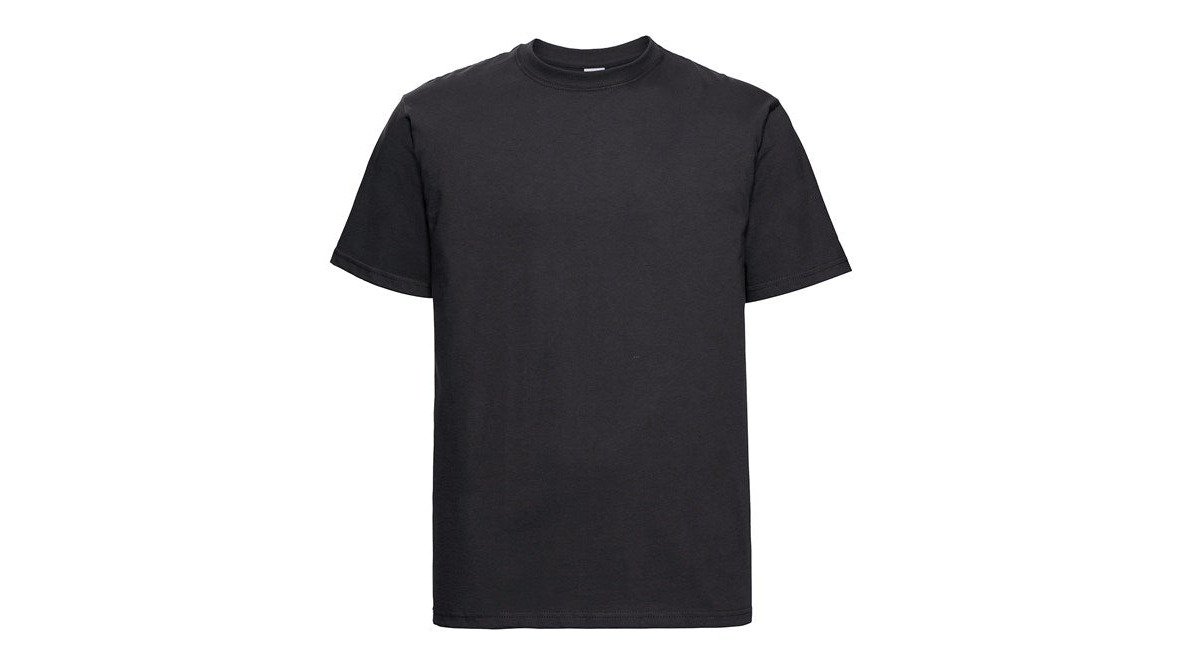
Ringspun cotton also gives a smoother surface, which matters when you add a printed logo. A smoother yarn takes ink more evenly and resists cracking at the print edges.
What most guides miss is that weight alone is not enough. A heavy shirt with weak side seams will split before a lighter one with double stitching. Check both.
Fit, Sleeve and Neckline Choices for Men and Women
Fit affects durability as much as comfort. A classic fit leaves room for movement and layers, while a relaxed fit reduces strain on seams during manual work.
Sleeve length is a practical choice. For a customisable option, see the Custom Gildan Ultra Cotton™ Long Sleeve T-Shirt.
Neckline matters for shape retention. A crew neck holds its shape best through washing. A V-neck looks smarter for client-facing uniforms but stretches more easily over time.
Russell J215M Classic Heavyweight Ringspun T-Shirt →
Job-Specific Fit and Layering Considerations
Most buyers focus on size charts, but the working environment should drive the cut. Use these practical checks:
- Movement and reach: A shirt that restricts overhead reach will pull at the shoulder seams and fail early. Try a size that lets you raise both arms without the hem lifting above the waistband. For trades that involve frequent bending or climbing, a relaxed fit with a longer body length reduces seam strain.
- Layering under protective equipment: If the tee sits under a harness, high-vis vest or flame-retardant outer layer, choose a lighter 150-180gsm fabric and a close-but-not-tight fit to avoid bunching. A bulky heavyweight tee can create pressure points under straps.
- Visibility requirements: Where high-visibility clothing is required, the tee is usually the base layer. A crew neck in a dark colour under a hi-vis vest reduces show-through and keeps the vest looking clean. Long sleeve tees can provide arm coverage where risk assessments call for it.
- Client-facing vs site work: A classic fit in a darker colour hides marks and looks smarter for client visits. A relaxed fit in a heavier cotton suits site work where abrasion is the main threat.
- Size range for teams: Many work tees run from S to 4XL. Ordering the full range in one go keeps a uniform consistent and avoids mismatched fits across a mixed team. Check the size guide for chest and body length rather than relying on S/M/L labels alone.
If you are weighing cuts for a mixed team, you can browse custom printed short sleeve t-shirts to compare fits.
A common pattern is to order one size up for workers who layer underneath, and to keep a stock of both classic and relaxed fits so each role gets the cut that suits its movement demands.
How to Wash Work T-Shirts So They Last
Washing is where most work tees lose their life. High heat, harsh detergent and a full tumble dry break down fibres and fade print faster than anything on site. A cooler, gentler routine adds months to every shirt.
Follow these care instructions:
- Wash at 30°C or lower to protect fibres and print
- Turn shirts inside out before washing to shield the logo
- Use a mild detergent and skip fabric softener, which coats fibres
- Wash work tees separately from abrasive items like jeans with zips
- Air dry where possible, or tumble on low heat
- Avoid bleach and high-temperature ironing directly on prints
Spotting Wear Before It Becomes a Replacement
Check shirts monthly for early wear signs. Pilling under the arms, thinning at the collar and cracked print edges are warnings. Catching them early lets you rotate a shirt out of client-facing use before it looks unprofessional.
Seam strength and colourfastness are the two indicators to watch. Fraying seams and faded panels mean the garment is near the end of its working life.
Custom Printed Work T-Shirts: Getting the Print to Last
Print durability depends on the fabric surface and the decoration method. A smooth, ringspun cotton takes print better than a rough, low-weight weave.
For teams that need logos to stay sharp, the base garment matters as much as the print. You can explore the Russell Collection Premium Custom Printed Apparel range for decoration-ready garments.
Embroidery is another option for workwear. It suits logos on heavier garments and holds up well to washing. The trade-off is cost and a stiffer feel on lightweight tees.
What Four Durable Work T-Shirts Cost in Practice
Price per shirt only tells part of the story. Total cost of ownership depends on how many washes a shirt survives. Here is how four options compare on weight, fabric and price:
Product |
Fabric |
Weight |
Price |
|---|---|---|---|
Gildan Heavy Cotton Adult T-Shirt |
100% cotton |
185gsm |
£13.74 |
Fruit of the Loom Men's Heavy T |
100% cotton |
195gsm |
£13.74 |
Russell J215M Classic Heavyweight Ringspun |
100% ringspun cotton |
210gsm |
£14.19 |
Pro RTX RX151 T-Shirt |
50% cotton, 50% polyester |
180gsm |
£14.29 |
The spread is small, under a pound between the cheapest and dearest. To benchmark a hi-vis option, check the Yoko Hi Vis Short Sleeve T Shirt. That changes the maths. Paying slightly more for a heavier, ringspun shirt usually costs less per wear because it lasts longer.
Conclusion
Choosing durable t-shirts for daily work comes down to reading the label properly: weight, fibre, stitching and care. Get those right and a work tee will outlast two cheap ones.
If you need branded workwear that holds up, Dprintclothing offers custom printing and embroidery on reputable brands like Russell, Gildan and Fruit of the Loom, with bulk discounts and a simple online ordering process for teams of any size.
Frequently Asked Questions
What makes a t-shirt durable enough for daily work?
Three things decide it: fabric weight, stitch quality and how you wash it. A 180gsm tee will thin out within months of daily wear, while a 210gsm ring spun cotton style like the Russell J215M holds its shape far longer. Check double-stitched hems and side seams, and look for a taped neckline. Wash at 30°C, inside out, and skip the tumble dryer. A durable t-shirt is a combination of construction and care, not one single feature.
Are heavyweight cotton work t-shirts better than lightweight ones?
For daily manual work, usually yes. Heavyweight cotton work t-shirts in the 185-210gsm range resist abrasion better, hide sweat marks and hold a printed logo without the fabric stretching underneath it. The trade-off is warmth: in a hot workshop or during summer groundskeeping, a 180gsm poly-cotton tee with moisture management can be more comfortable. Match the weight to the job, not to a general rule.
How should I wash work t-shirts to make them last longer?
Turn them inside out, wash at 30°C on a normal cycle, and use a mild detergent without bleach. Avoid fabric softener because it coats cotton fibres and reduces breathability. Skip the tumble dryer where you can, since heat drives shrinkage and pilling; hang to dry instead. Wash work tees separately from anything with zips or Velcro, which snag fabric. Following these steps is the simplest way to slow colour fade and seam wear across a full team's kit.
Are polyester or cotton t-shirts better for everyday work?
It depends on the conditions. 100% cotton, such as the Gildan Heavy Cotton at 185gsm, feels softer, takes print well and suits indoor or light outdoor work. Poly-cotton blends like the 50/50 Pro RTX RX151 at 180gsm dry faster and resist shrinking, which suits sweaty or outdoor jobs. For heavy manual work where abrasion is the main enemy, a 210gsm cotton tee is the more hard-wearing option. Choose by job conditions rather than brand preference.

