

Best Custom Embroidery for Trade Companies: 2026 Guide
Last Updated: October 24, 2026
Quick Summary
The best custom embroidery for trade companies matches fabric weight to the job: 220gsm polos for electrical and plumbing staff, 300gsm sweatshirts and hoodies for construction, and 280gsm softshells for outdoor trades. Choose a supplier who confirms lead times in writing and provides a sample stitch-out before bulk runs.
- Heavier garments of 280gsm and above give the needle a stable surface so stitching sits flat.
- The Pro RTX RX101 polo at 220gsm and £14.29 suits electrical, plumbing and joinery teams.
- A single-garment order is possible, so sole traders can buy one branded polo.
- Embroidery requires a one-off digitising fee per logo, so compare total order cost.
- Wash embroidered workwear inside out on a cool or warm cycle and avoid fabric softener.
Table of Contents
- What Trade Companies Should Look for in Custom Embroidery
- At-a-Glance Comparison: Embroidered Workwear Options
- Embroidered Workwear for Small Businesses: Top Garment Picks
- Printed vs Embroidered Workwear: Which Suits Your Trade?
- Company Logo Embroidery: Artwork, Digitising and Brand Visibility
- Bulk Embroidered Workwear: Pricing, Minimums and Lead Times
- Caring for Embroidered Workwear: Durability and Washing Tips
- Conclusion
- Frequently Asked Questions
What Trade Companies Should Look for in Custom Embroidery
Custom embroidery is the process of stitching a company logo or design directly into a garment using thread, producing a raised, hard-wearing finish that survives repeated industrial washing. For trade companies, it is often the difference between staff who look employed and staff who look professional. At Dprintclothing, we have supplied embroidered workwear since 2015, and the questions trade buyers ask rarely change: will it last, will it look sharp, and will it arrive on time.
Durability and Fabric Weight
Fabric weight drives embroidery quality more than most buyers realise. A lightweight 180gsm T-shirt holds a small chest logo well but can pucker under a dense, multi-colour design. Heavier garments, generally 280gsm and above, give the needle a stable surface, so stitching sits flat and keeps its shape through washing.
For trade work, match the garment to the job. Site-based teams need heavier fabrics that resist abrasion. Customer-facing staff can wear lighter polo shirts without losing a professional look.
Logo Placement and Stitch Quality
Placement is where cheap embroidery shows itself. A logo stitched too high, too low or off-centre is noticeable at three metres.
Stitch quality comes down to digitising: the file that tells the machine where each stitch goes. Poorly digitised logos produce thread breaks, gaps and distorted lettering, especially on small text. Ask to see a sample stitch-out before a bulk run.
At-a-Glance Comparison: Embroidered Workwear Options
The table below summarises the embroidered garments we recommend most often to trade clients, with the fabric weight and price that matter when you are kitting out a team. We have also added a trade-suitability column, because the right garment for a plumber is not the right garment for a landscaper.
| Garment | Fabric Weight | Price | Best For | Trade Suitability |
|---|---|---|---|---|
| Pro RTX RX101 Piqué Polo Shirt | 220gsm | £14.29 | Customer-facing staff, site managers | Electrical, plumbing, joinery, smart enough for client visits, robust enough for site |
| Pro RTX RX151 T-Shirt | 180gsm | £14.29 | Summer site wear, promotional events | Landscaping, groundworks, lightweight for outdoor heat, but less abrasion-resistant |
| Colours Bib Apron | 195gsm | £16.49 | Hospitality, catering, retail counters | Trade counters, showrooms, protects clothing and takes a chest or pocket logo |
| RX301 Pro Sweatshirt | 300gsm | £16.49 | Cold-weather layers, workshop wear | Construction, scaffolding, heavy enough for outdoor layering under a jacket |
| RX350 Pro Hoodie | 300gsm | £24.19 | Outdoor teams, casual branded kit | Landscaping, delivery, warm layer that still carries a clear back or breast logo |
| Pro RTX RX500 Softshell Jacket | 280gsm | £26.39 | Wind and shower protection on site | All outdoor trades, shower-resistant shell that keeps a logo visible in poor weather |
If you want to browse the full range of custom Pro RTX polo shirts before deciding, our product pages list every colourway and size.
Matching the Garment to the Trade
Trade buyers often ask for one uniform across the whole business, but the job role should drive the choice. A few practical rules of thumb:
- Construction and scaffolding: prioritise 300gsm sweatshirts and hoodies for warmth, and a softshell for the outer layer. Logos on the back are more visible when staff are working at height or with their back to a client.
- Electrical and plumbing: polo shirts at 220gsm strike the balance between a smart client-facing appearance and enough weight to hold a crisp breast logo. Avoid very light T-shirts if staff are crawling under floors or in lofts.
- Landscaping and groundworks: lighter T-shirts suit summer heat, but expect to replace them more often if staff are handling rough materials. A 300gsm hoodie is a better year-round investment for the same team.
A common pattern is to standardise the logo placement across every garment so the team looks consistent even when individuals wear different pieces for different jobs. Confirm fabric weight and composition with your supplier before ordering, because product names alone do not tell you how a garment will perform on site.
Embroidered Workwear for Small Businesses: Top Garment Picks
Small businesses often assume embroidery means a minimum order of fifty or more. It does not have to. A single-garment order is perfectly workable, which matters if you are a sole trader buying one branded polo for quoting appointments.
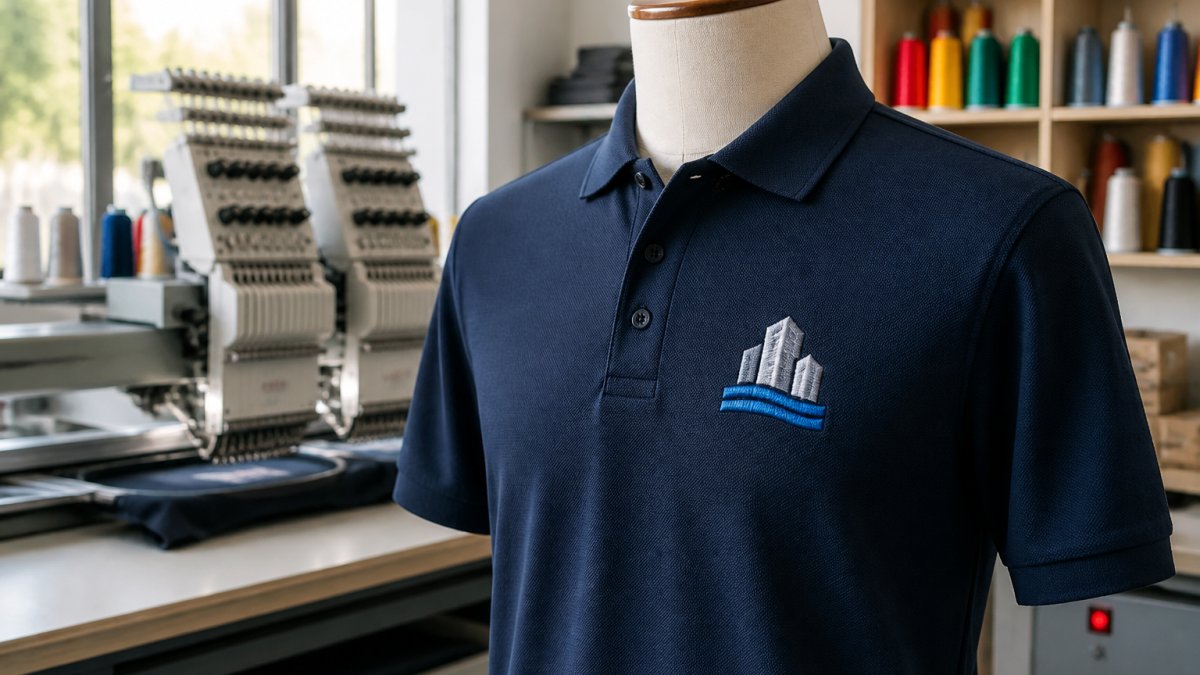
Embroidered Pro RTX RX101 Pro Piqué Polo Shirt
The RX101 is the workhorse of trade uniforms. At 220gsm and a 50/50 cotton-polyester blend, it holds a breast logo cleanly and keeps a smart collar shape through repeated washing. You can view the Pro RTX RX101 polo in every available colour.

Where it falls short: the classic fit runs generous, so order a size down if your team prefers a closer cut.
Embroidered Pro RTX RX151 T-Shirt
For summer site work and promotional events, the RX151 is the practical pick. It is lighter at 180gsm, which keeps staff cool, and the 50/50 blend resists shrinking better than pure cotton. At £14.29 it is the cheapest way to put your company logo on a team.
The trade-off is durability under heavy abrasion. If your staff are handling rough materials daily, a polo or sweatshirt will outlast it.
Embroidered Colours Bib Apron
Hospitality and retail trades need something different: an apron that takes a logo and survives a commercial wash cycle. The Colours Bib Apron is 195gsm poly-cotton twill with an adjustable neck strap and generous coverage, priced at £16.49. You can order the embroidered Colours Bib Apron in many colours to match your brand.

Printed vs Embroidered Workwear: Which Suits Your Trade?
The honest answer: it depends on the design and the job. Embroidery suits logos, text and simple emblems, and it lasts.
For trade companies, embroidery wins on three counts. It does not crack or peel after repeated washing. It reads as more premium to clients. And it handles small logos and text better than most print methods.
Embroidered Pro RTX RX500 Pro 2-Layer Softshell Jacket →
A common approach is to combine both: embroidered breast logo for everyday authority, printed back design for events. If you want a deeper look at custom printed uniform options alongside embroidery, we cover both services in detail.
Company Logo Embroidery: Artwork, Digitising and Brand Visibility
Every embroidered logo starts as a digital file called a digitised design. This is not the same as your JPG or PNG logo.
Good digitising is what separates a logo that looks sharp from one that looks homemade.
For companies putting logos on both the back and breast of a garment, a combined digitising service covers both placements in one file. You can arrange combined back and breast logo digitising through our service.
Brand visibility follows placement discipline. One clear logo on the left breast outperforms three cluttered badges. Keep it simple, keep it consistent across every garment, and your team becomes recognisable on sight.
Bulk Embroidered Workwear: Pricing, Minimums and Lead Times
Bulk orders are where trade companies save money, but the pricing structure is not always obvious. Here is how it typically works, and what to check before you commit to a supplier.
What drives the price:
- Garment cost, which varies by fabric weight and brand
- Stitch count, since denser logos take longer to embroider
- Number of logo positions (breast only versus breast and back)
On minimums: A single-garment order is possible, which suits sole traders and small teams.
On lead times: Turnaround depends on garment stock and embroidery volume. Standard orders typically move faster than large custom runs.
A Practical Buying Checklist for Trade Buyers
Before you place a bulk order, run through these checks. They are the questions that separate a smooth repeat-order relationship from a one-off purchase you regret.
- Request a sample stitch-out on the actual garment. A logo that looks sharp on a polo may pucker on a lightweight T-shirt. Ask for the sample on the fabric weight you intend to order.
- Confirm the digitising file is yours to reuse. If you switch suppliers later, you should not have to pay to redigitise a logo you already own. Ask who holds the stitch file.
- Check repeat-order consistency. Ask how the supplier stores your digitised logo and whether a repeat order will match the first run in thread colour and placement.
- Get the lead time in writing, with a buffer. For fixed-date events, confirm the dispatch date rather than the delivery date, and allow extra days for courier delays.
- Ask about garment sourcing. Some embroiderers supply garments; others embroider garments you supply. Supplying your own can save money if you already have a preferred brand, but check the supplier will accept customer-supplied garments and what happens if one is faulty.
- Compare total cost, not unit price. Add the digitising fee, any setup charges, and delivery to the per-unit price before comparing quotes.
- Check the care label and washing instructions. A garment that cannot survive your team's wash cycle is a false economy, however cheap the unit price.
Caring for Embroidered Workwear: Durability and Washing Tips
Embroidery is durable, but it is not indestructible. A few habits keep logos looking sharp for years.
- Wash garments inside out to reduce friction on the stitching
- Use a cool or warm cycle rather than a hot wash, which can shrink fabric around the embroidery
- Avoid fabric softener, which can leave residue on thread
Following these steps keeps thread colour vibrant and prevents the puckering that comes from heat damage. For heavy-duty trade wear, check garments after each wash for loose threads and trim them rather than pulling.
Conclusion
Kitting out a trade team with embroidered workwear comes down to three decisions: the right fabric weight for the job, a properly digitised logo, and a supplier who confirms lead times in writing. Get those right and your team looks professional on every site and every client visit.
At Dprintclothing, we have handled both single-garment orders and bulk runs since 2015, offering both embroidery and printing, bulk discounts, and fast delivery on garments from brands like Pro RTX, Regatta and Premier. Get started with Dprintclothing and put a logo on your team that lasts.
Frequently Asked Questions
What is the best embroidery for workwear?
The best embroidery for workwear depends on the garment and its use. For daily trade wear, choose durable fabrics like the Pro RTX RX301 sweatshirt (55% polyester, 45% cotton, 300gsm) or the RX500 softshell jacket (97% polyester, 5% elastane, 280gsm). These hold stitches well and resist pilling. For lighter options, the RX101 polo (220gsm) or RX151 t-shirt (180gsm) suit indoor or warm conditions. Always prioritise a smooth, stable surface for logo stitching.
Is embroidered workwear more durable than printed workwear?
Yes, embroidery generally outlasts printing because the threads are stitched into the fabric rather than sitting on top. Embroidered logos resist cracking, peeling and fading through repeated washing and heavy use, making them ideal for trade uniforms. Printed workwear can be cost-effective for short-term promotions, but for long-term brand visibility and professional appearance, embroidery is the more durable choice.
How much does custom workwear embroidery cost?
Pricing depends on the garment and embroidery complexity. At Dprintclothing, embroidered polo shirts start at £14.29, t-shirts at £14.29, sweatshirts at £16.49, hoodies at £24.19, and softshell jackets at £26.39. Bulk orders benefit from discounts. For a precise quote, provide your logo and garment quantities; costs include digitising and stitching, with no hidden fees.
How should embroidered workwear be washed and cared for?
Turn garments inside out before washing to protect the stitching. Use a gentle cycle at 30°C or lower, and avoid fabric softeners that can degrade threads. Do not tumble dry on high heat; air dry or use a low setting. Iron on the reverse side, never directly on the embroidery. Following these steps keeps colours vibrant and prevents thread fraying, extending the life of your branded uniforms.
How many embroidered garments should a small trade business order?
Start with a core team set: one or two garments per employee, plus a few spares for new hires or replacements. For a team of five, ordering 10-15 items is practical. Bulk embroidered workwear often lowers the per-unit cost, so consolidating orders makes sense. Dprintclothing handles both single-garment and bulk orders, so you can scale as your business grows without overcommitting.

