

7 Best Custom Clothing for Tradesmen: Workwear Picks
Last Updated: November 4, 2026
Quick Summary
The best custom clothing for tradesmen balances fabric weight, wash durability and logo finish, not just price. Site-ready garments weigh 260gsm or more, carry reinforced stitching at stress points, and use stitched branding rather than a thin transfer.
- Start with the outer layer and work inward so you don't overspend on mid-layers.
- The RX500 Pro Softshell Jacket is 280gsm and windproof with a shower-resistant shell.
- Supply vector artwork in AI, EPS or SVG plus Pantone colour references before production.
- Keep print and embroidery away from reflective bands on hi-vis garments.
- Collect chest measurements rather than relying on S, M, L labels when bulk ordering.
Table of Contents
- Quick Comparison: Best Custom Clothing for Tradesmen
- Personalised Workwear for Tradesmen: The Items That Earn Their Keep
- Best Fabrics for Heavy-Duty Workwear: What Survives a Building Site
- How to Design a Professional Workwear Logo That Survives the Wash
- Hi-Vis and Safety Compliance: What Tradesmen's Clothing Must Meet
- Bulk Order Workwear Guide: Sizing, Turnaround and Costs
- Sustainability and Long-Term Durability: What to Check Before You Buy
- Build Your Tradesman Workwear Bundle
- Frequently Asked Questions
Quick Comparison: Best Custom Clothing for Tradesmen
The best custom clothing for tradesmen balances fabric weight, wash durability and logo finish, not just price. At Dprintclothing, we have offered embroidered and printed workwear since 2015. garments that survive a building site share three traits. They weigh 260gsm or more, they carry reinforced stitching at stress points, and the branding is stitched rather than applied as a thin transfer.
Below, we rank the pieces that earn their keep, then cover fabrics, logo design, safety compliance and bulk ordering.
Garment |
Price |
Fabric Weight |
Branding Method |
Best For |
|---|---|---|---|---|
RX500 Pro Softshell Jacket |
£26.39 |
280gsm |
Print or embroidery |
Wet, windy sites |
Premier Artisan Fleece Gilet |
£27.99 |
260gsm |
Embroidery |
Core warmth, free arms |
RX402 Pro Fleece |
£23.64 |
300gsm |
Embroidery |
Cold-weather layering |
RX301 Pro Sweatshirt |
£16.49 |
300gsm |
Embroidery |
Everyday site wear |
RX101 Pro Piqué Polo |
£14.29 |
220gsm |
Embroidery |
Client-facing jobs |
Yoko Hi-Vis Hoodie |
£31.89 |
280gsm |
Winter visibility |
|
Yoko Enhanced Vis Waistcoat |
£10.99 |
120gsm |
Summer visibility |
|
Russell J215M T-Shirt |
£14.19 |
210gsm |
Summer base layer |
Personalised Workwear for Tradesmen: The Items That Earn Their Keep
Personalised workwear for tradesmen works hardest when each layer does one job well. A jacket blocks wind and rain, a fleece holds warmth, and a polo keeps you presentable in front of a client. Buying one garment to do all three wastes money.
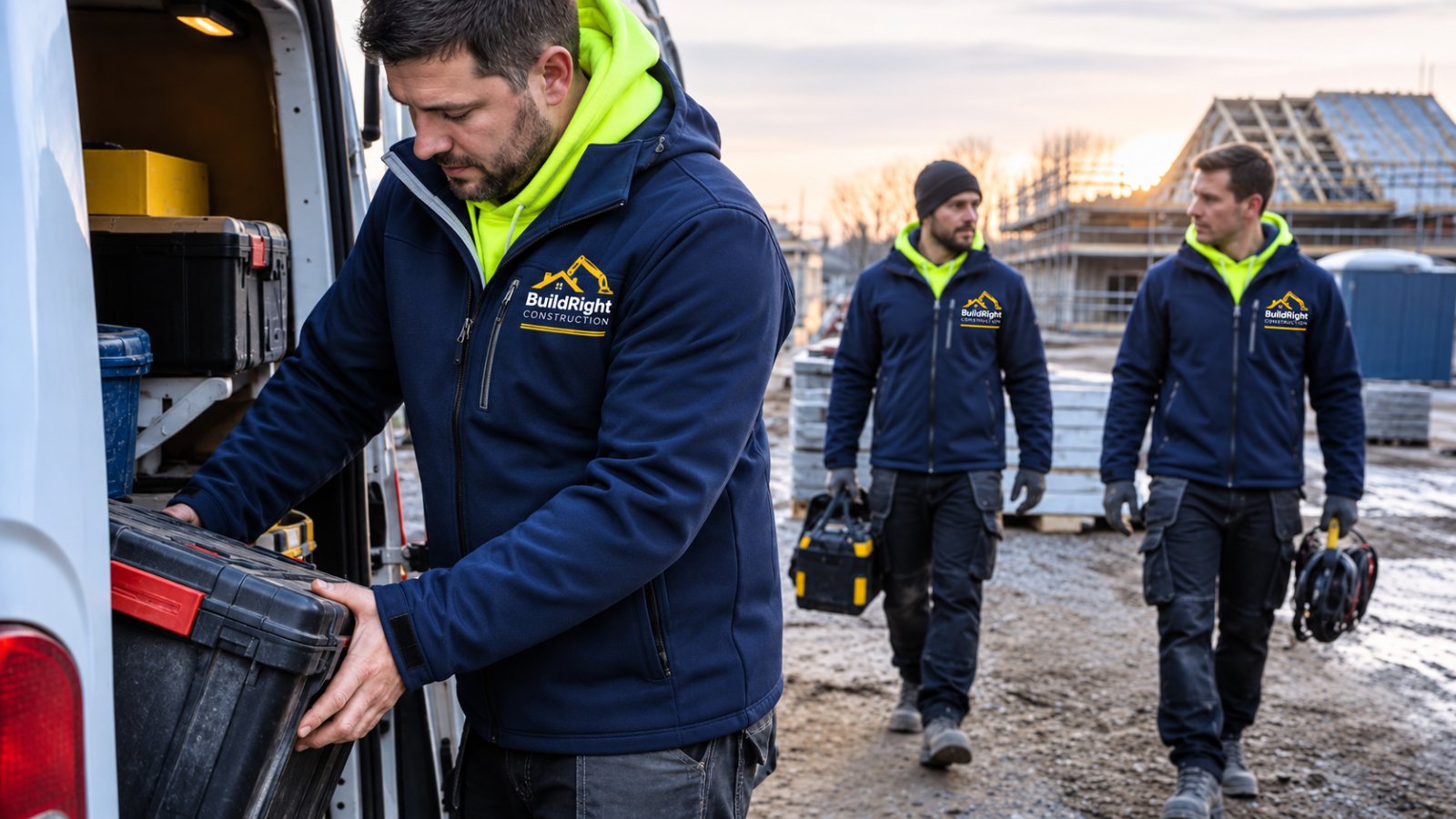
Start with the outer layer and work inward. That order stops you overspending on mid-layers you will rarely see.
Layering pieces: fleeces, gilets and softshells
The Pro RTX RX500 Pro 2-Layer Softshell Jacket (£26.39) is our pick for the worst weather. Its 280gsm polyester and elastane shell is windproof and shower-resistant, and the smooth face takes a crisp printed logo. Readers comparing softshell options can check details and order an embroidered softshell.

For core warmth without bulk, the Premier Artisan Fleece Gilet (£27.99) keeps your arms free for overhead work. Its 260gsm polyester fleece is suitable for embroidered personalisation. If you want a full-sleeve option, the RX402 Pro Fleece (£23.64) uses 300gsm anti-pill fleece with an anti-pill finish.
- Best for: gilet for indoor trades, softshell for outdoor sites
- Skip if: you work in sustained rain, where a proper waterproof shell is the only answer
Base layers and summer staples
Summer kit gets abused. It is washed constantly, stretched over shoulders and worn without a jacket to protect it. The RX301 Pro Sweatshirt (£16.49) handles that grind with a 300gsm polycotton blend, ribbed cuffs and a taped neckline.
The RX101 Pro Piqué Polo (£14.29) is the one to wear when a customer is watching. Its 220gsm cotton-poly blend offers a smart, polished look. For hot days, the Russell J215M T-Shirt (£14.19) uses 210gsm ringspun cotton.
Best Fabrics for Heavy-Duty Workwear: What Survives a Building Site
Polycotton blends and high-weight synthetics are commonly chosen for workwear. Lightweight fabrics are generally less suited to heavy use.
Fabric weight is the number to check. Fabric weight is a useful guide when comparing garments.
Fabric |
Weight Range |
Abrasion Resistance |
Breathability |
Typical Use |
|---|---|---|---|---|
Polycotton |
220-300gsm |
High |
Medium |
Polos, sweatshirts |
Polyester fleece |
260-300gsm |
Medium |
Medium |
Mid-layers |
Softshell |
280gsm |
High |
Medium-high |
Outer layer |
Ringspun cotton |
210gsm |
Low-medium |
High |
Summer base |
Two more terms decide whether a garment lasts. Anti-pill treatment reduces the formation of fibre balls on fleece.
How to Design a Professional Workwear Logo That Survives the Wash
A workwear logo survives when it is built from clean vector artwork, digitised properly for embroidery, and sized to the garment. Blurry JPEGs and thin one-pixel lines fail on fabric, whatever the branding method.
Before production, you can supply:
- Vector artwork in AI, EPS or SVG format, so lines stay sharp at any size
- Pantone colour references, so your brand colour matches across garments and reorders
- A clear placement brief, so logos sit at the same height on every item
Logo digitisation converts artwork into stitch paths for embroidery. Clean digitising suits the garment and the design, and the stitch types used depend on the artwork.
Very small text can be harder to reproduce cleanly in thread, so it is worth checking your design at the intended size.
Placement follows a few conventions, but the garment decides the detail. Placement is worth agreeing before production, so the logo sits where you want it on each garment.
Thread pull is the failure mode to design against. It happens when a logo is digitised with long stitches crossing a stretchy knit, so the fabric pulls away from the embroidery and leaves a puckered ring. If you are supplying your own artwork, it is sensible to ask for a sample on the actual garment before approving a larger run.
For printed logos, the constraints shift. Printed and embroidered logos suit different artwork, so the best method depends on the design and garment.
When reordering, keeping your artwork and colour references on file helps maintain a consistent look across your team.
Pro RTX RX500 Pro 2-Layer Softshell Jacket →
Hi-Vis and Safety Compliance: What Tradesmen's Clothing Must Meet
Buyers of hi-vis clothing should check the product label and any conformity documentation for the relevant safety standard.
The Yoko Hi-Vis Pull-Over Hoodie (£31.89) is built for visible work, with 280gsm polyester, and is described as conforming to safety standards. The Yoko Enhanced Vis Waistcoat (£10.99) covers summer visibility at 120gsm, and both take a printed logo.
Compliance is not the same as comfort, and it is not the same as branding. A certified garment with a badly placed logo can obscure reflective tape, which defeats the point. Keep print and embroidery away from reflective bands and always check the certification documents before you commit to a bulk order. The Health and Safety Executive guidance on PPE sets out employer duties here.
Bulk Order Workwear Guide: Sizing, Turnaround and Costs
Bulk ordering goes smoothly when you collect sizes first, approve a digital mockup second, and confirm the deadline third. Late size lists can cause delays. But the biggest mistake is treating every trade the same. An electrician, a plumber and a carpenter wear the same polo differently, and a bulk order that ignores those differences produces gear people quietly stop wearing.
Start with the trade, not the catalogue. Different trades have different needs, so it can help to ask each wearer which garments they use most, then build the order around those answers rather than a single company-wide list.
Our approach at Dprintclothing is to quote clearly and confirm turnaround before you commit. If you are planning a team rollout, you can check what turnaround times are achievable for custom clothing orders before you set a start date.
- Collect sizes from every wearer, including spares for new starters
- Confirm logo placement and colour on a digital mockup
- Approve the artwork in writing
- Set a delivery date with buffer for site inductions
- Keep two spare garments per size band
Sizing deserves more care than most buyers give it. Workwear is often worn over a base layer, so a size that fits in summer can be tight in winter. Where a garment is described as regular fit, most teams find that ordering one size up for outer layers and true-to-size for polos works well. Collect chest measurements rather than relying on S, M, L labels, because sizing varies between brands and even between styles from the same brand.
Turnaround depends on two things: garment availability and branding complexity. Stock garments in common colours ship faster than special-order lines, and a single-position embroidered logo is quicker to produce than multi-position print across several garments. Build a buffer into your delivery date for site inductions, and avoid promising a start date you cannot control.
Costs can fall on larger runs, as bulk discounts are available. Budget per head by adding your chosen garments together, then factor in embroidery or print.
Ordering a single size band for the whole team can lead to ill-fitting garments, so collecting individual sizes is generally sensible.
Sustainability and Long-Term Durability: What to Check Before You Buy
Durable garments can reduce the need for frequent replacement, which is one way to think about longer-lasting workwear.
Check these before you buy:
- Fabric weight and composition stated on the product page, not just in marketing copy
- Reinforced stitching at shoulders, cuffs and pocket mouths
- Wash fastness ratings, so colour and print survive industrial laundering
- Replacement availability, so you can reorder the same garment in two years
It is worth asking suppliers whether they can restock the exact style and colour later, so a team stays consistent over time.
Build Your Tradesman Workwear Bundle
The right bundle covers three temperatures and one impression. Start with a softshell for wet days, a fleece or gilet for cold ones, and a polo or tee for warm ones. Add hi-vis where the risk assessment demands it.
At Dprintclothing, we offer both embroidery and printing, and bulk discounts on larger orders. Our range includes garments from Pro RTX, Russell, Fruit of the Loom, Gildan and Yoko.
Get started with Dprintclothing to kit out your team in custom workwear.
Frequently Asked Questions
What is the most durable fabric for tradesmen's workwear?
Polycotton blends and heavyweight polyester fleece hold up best. Look for fabric weights of 280gsm and above for outer layers, and reinforced stitching at stress points. A 300gsm anti-pill fleece or a 280gsm softshell suits heavier wear better than lightweight cotton. For base layers, a 210gsm ringspun cotton t-shirt is a lightweight option for everyday wear.
Is embroidery or printing better for heavy-duty workwear?
Embroidery suits many workwear garments, including fleeces, gilets, polos and sweatshirts. Printing can suit detailed logos and smooth surfaces such as softshell jackets. For a team order, the best method depends on the garment and design, and we are happy to advise.
Are there specific safety standards for tradesmen's clothing?
Hi-vis garments should conform to the relevant safety standards for visibility, and you should check the label for the conformity marking before buying. The Yoko hi-vis hoodie and waistcoat in this guide are both described as conforming to safety standards. Beyond hi-vis, check that any garment worn near heat or machinery meets the site's own PPE requirements. Ask your supplier for conformity documentation with bulk orders so you can show it on site.
How do I choose the right size for bulk workwear orders?
Get a size set from your supplier before committing to a bulk order, then have each team member try the actual garment rather than guessing from their usual clothes size. Workwear fits differently from fashion: layering pieces need room underneath. Record each person's size against the garment style, not a generic size, and order a few spares in the most common sizes for new starters.
How does branded workwear improve business credibility?
Matching branded workwear can present a consistent, professional image. Many businesses find that a uniform helps customers recognise who is on their property, and a team in matching gear can look well organised.
Kitting out a team is a decision you live with for years, so choose garments that earn their place. Dprintclothing can embroider or print your logo on every layer covered here, from the £26.39 RX500 softshell to the £14.19 Russell tee, with bulk discounts as your order grows. Get started with Dprintclothing and build a workwear bundle your team will actually wear.

